The short list every swimmer needs
Every swimmer, from a six month old baby to an adult beginner, needs the same small set of personal items: swimwear, a towel, goggles, drinking water and a change of clothes. Everything else depends on age and on the pool.
Because Rehan Ahmad travels to your pool anywhere in Dubai, there is no reception desk and no shop to buy a forgotten item from. Packing the same small bag each time is the simplest way to keep the full 60 minutes in the water.
If something is missing the lesson still goes ahead. Goggles and swim nappies are the two items worth a second check before you leave the house.
- Swimwear that fits closely and stays put
- A towel, and a second one for the car seat
- Goggles that have been fitted to the swimmer's face
- A bottle of drinking water
- A dry change of clothes
- Flip flops or pool sliders for hot decking
Goggles are the one item worth getting right
Leaking goggles waste more lesson time than any other piece of kit. A child who stops every two minutes to empty water out of their goggles is not practising, and the frustration often reads as fear of the water when it is simply badly fitting plastic.
Fit them before you arrive. Press the eye cups gently onto the face without the strap over the head, then let go. If they hold for a second or two by suction alone, the frame shape suits that face. If they fall away immediately, a different pair will work better.
The strap sits around the widest part of the back of the head, not up over the crown, and it should be snug rather than tight. A strap tightened to compensate for a poor seal leaves marks on the face and still leaks.
For very young children, soft silicone frames with a single rear strap are easiest to manage. Junior sizing matters far more than brand.
Swimwear, caps and towels
Swimwear should be close fitting and stay in place when the swimmer pushes off a wall. Loose board shorts and heavy cotton drag through the water and make good body position harder to feel, which is the opposite of what a beginner needs.
A swim cap is worth bringing for anyone with long hair. It keeps hair out of the eyes during breathing practice and stops it tangling in goggle straps halfway through a drill.
Two towels beat one. Dubai pool decks are hot, the walk back to the villa or the lift is short but wet, and a dry towel for the car seat saves a great deal of complaining on the way home.
Babies and toddlers need a little more
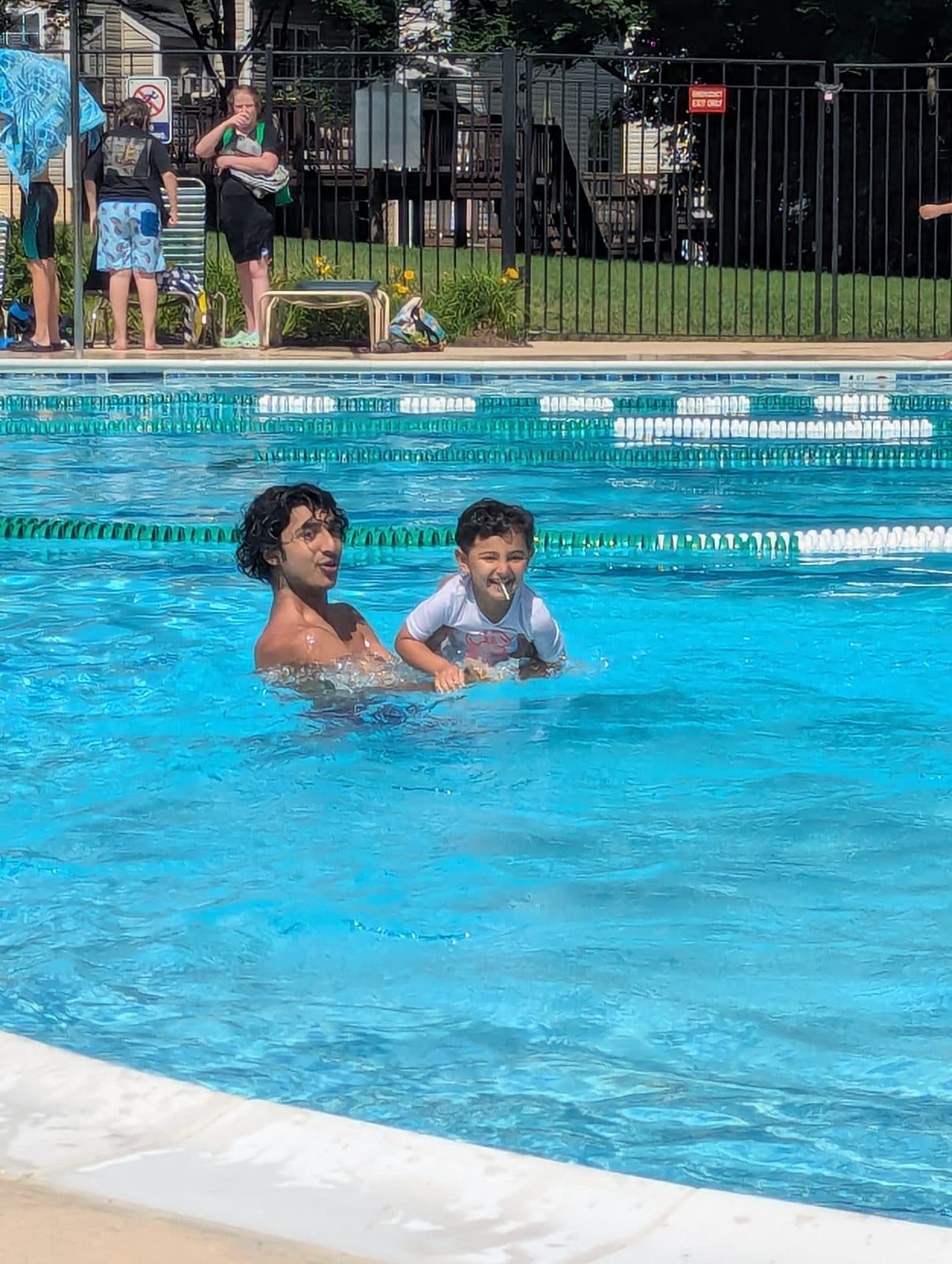
Babies and toddlers swim with a parent in the water, so pack for two people rather than one. A reusable swim nappy is essential and is required by most pools in Dubai, whether the lesson is in a private villa pool or a shared community pool.
Reusable swim nappies with snug elasticated legs are more reliable than disposable ones, and many families use a disposable liner inside a reusable outer for peace of mind. Ordinary nappies swell and fall apart in water and should never be worn in a pool.
Very young children lose heat quickly, so a warm towel or a hooded towelling robe waiting at the poolside makes the end of the lesson much calmer. The American Academy of Pediatrics suggests water for swim classes for children aged three and under should be heated to roughly 87 to 94F, about 30.5 to 34.4C, which is warmer than a typical unheated pool.
A small snack and a drink for afterwards are worth having in the bag. An hour of swimming makes small children hungry faster than most parents expect.
Sun, shade and water at a Dubai pool
Most swimming lessons in Dubai happen outdoors, so sun protection belongs in the bag all year rather than only in summer. A water resistant sunscreen applied about twenty minutes before the lesson has time to bind to the skin before anyone gets in.
A rash vest or a long sleeved swim top covers more skin than sunscreen ever will and does not wash off, which makes it the easier option for a child who will be in the water for a full hour.
Bring drinking water for the swimmer and for the parent on the poolside. It is easy to forget that an hour of swimming is an hour of exercise, and people do not notice they are sweating while they are wet.
If the pool has no shade at all, a small parasol or a towel draped over a lounger gives a young child somewhere cooler to stand during the short breaks in a lesson.
What Rehan brings, so you do not have to
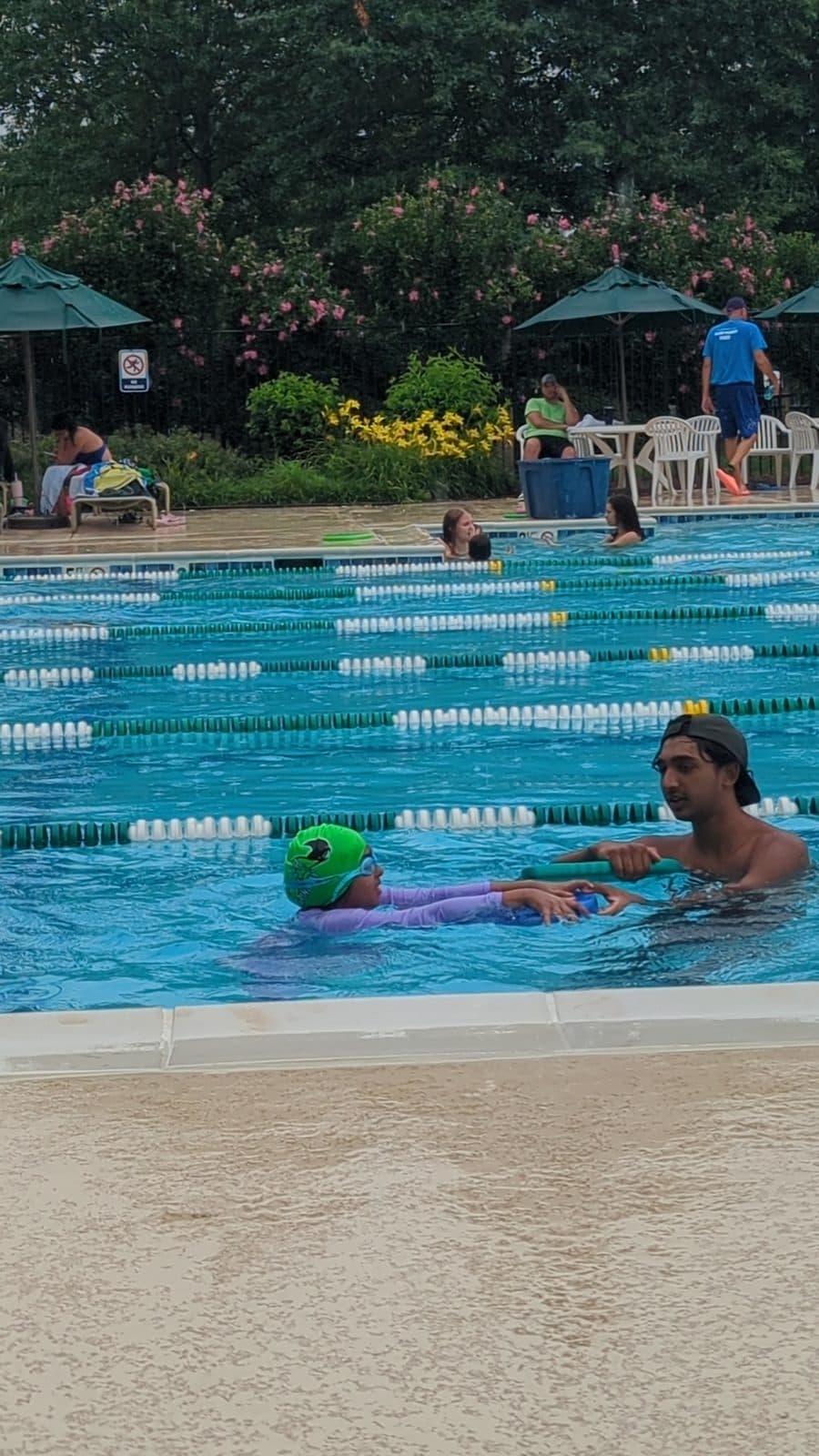
Rehan Ahmad brings the teaching equipment to every lesson and it is included in the lesson price. That covers kickboards, pool noodles, dive toys and any small aid a particular drill needs, so families never have to buy coaching kit of their own.
There is no equipment fee, no registration fee and no contract. A single lesson is AED 200, a four lesson pack is AED 600, which works out at AED 150 a lesson, and an eight lesson pack is AED 1,000, or AED 125 a lesson.
Travel to your location is charged on top of the lesson price and depends on distance. If Rehan arranges a pool for a family who does not have one, the hire or entry cost is billed on at cost. Both are confirmed before you book rather than added afterwards.
What to leave at home
Inflatable arm bands, rubber rings and floatation swimsuits are the items most worth leaving behind. Water safety bodies, including the American Academy of Pediatrics, are consistent that inflatable toys are not safety devices and are no substitute for close supervision.
They also work against the skill being taught. Arm bands hold a child upright with the legs hanging down, which is almost exactly the body position a swimmer has to unlearn before they can float, glide or swim a length.
A child who feels safe only while wearing them often becomes more anxious once they come off, which adds lessons rather than saving them. Rehan uses supported floating, noodles and his own hands to give the same reassurance without teaching a position that has to be undone later.
Fins, paddles and other training aids are not needed either. They belong to a later stage of competitive training and are supplied at the point a swimmer is ready to use them.
Two checklists worth screenshotting
Two situations catch families out more than any other. The first is a baby or toddler lesson, where a parent is getting into the water too and therefore needs their own swimwear and towel. The second is an adult beginner, who often worries more about where to change than about the swimming itself.
For a baby or toddler lesson, pack a reusable swim nappy and a spare, swimwear and a towel for the adult in the water, a hooded towelling robe or second towel for the child, a rash vest, sunscreen, a drink and a snack, and dry clothes for both of you.
For an adult beginner, pack close fitting swimwear, goggles that were fitted at home, a swim cap if you have long hair, a towel, drinking water, flip flops and dry clothes. If the lesson is at your own building pool, changing at home and walking down in a robe is usually simpler than using a shared changing room.
Everything on both lists is ordinary household kit. Nothing on it needs to be bought specially except goggles and, for the youngest swimmers, a swim nappy.
- Pack the bag the night before, so goggles are not the thing you forget
- Rinse goggles in fresh water after every lesson so the seal lasts longer
- Write the child's name on goggles and towels if you use a shared community pool