Why no honest coach will give you a single number
Any coach who promises that your child will swim in exactly six lessons is selling certainty they do not have. Progress depends on the swimmer's age, their starting confidence, how often they get in the water outside lessons, and whether the block runs continuously or is spread across a year.
What can be said honestly is a range. Most complete beginners need a continuous block of roughly eight to twenty one-hour private lessons before they can swim independently across a pool and get themselves safely back to the side.
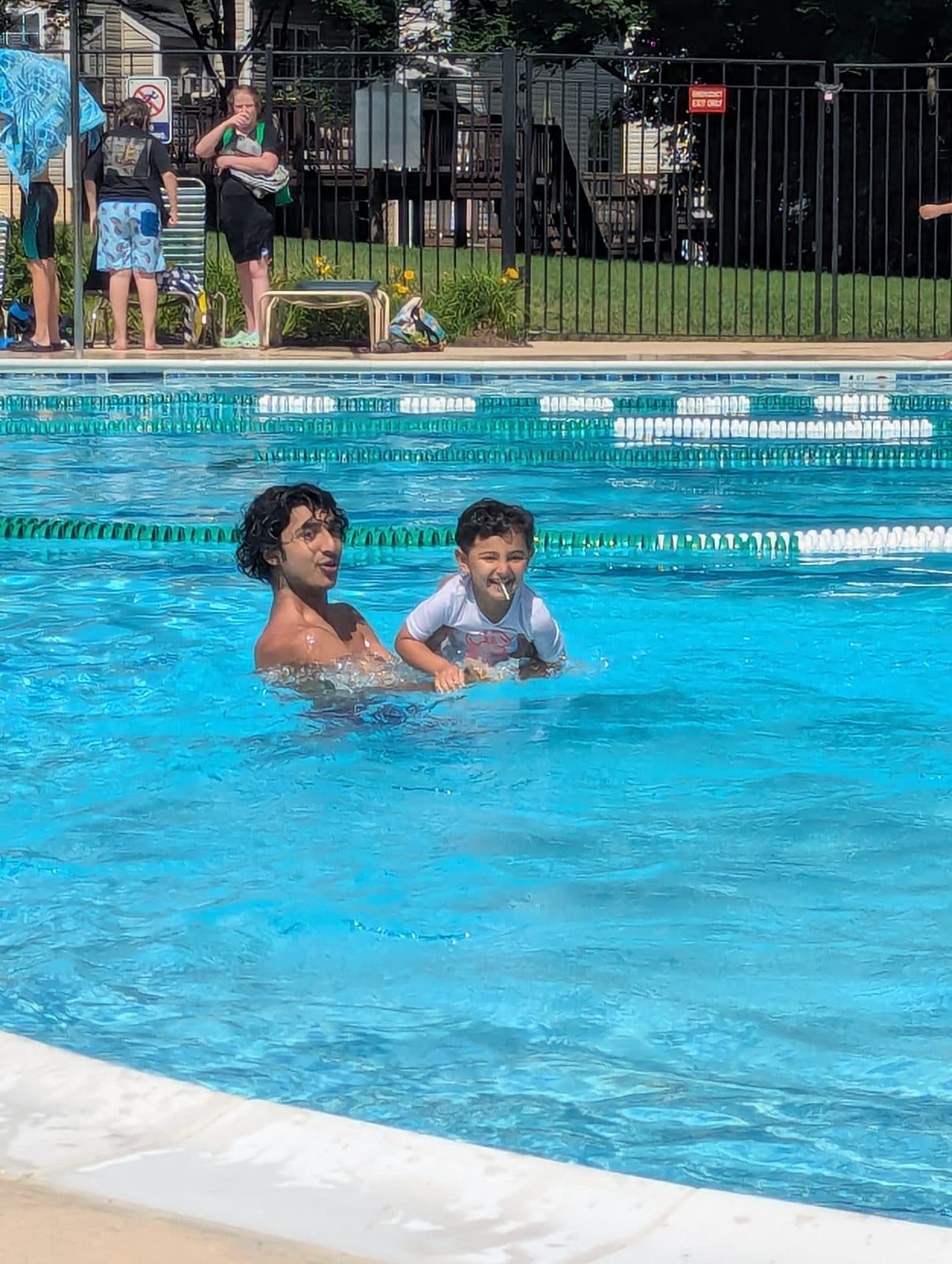
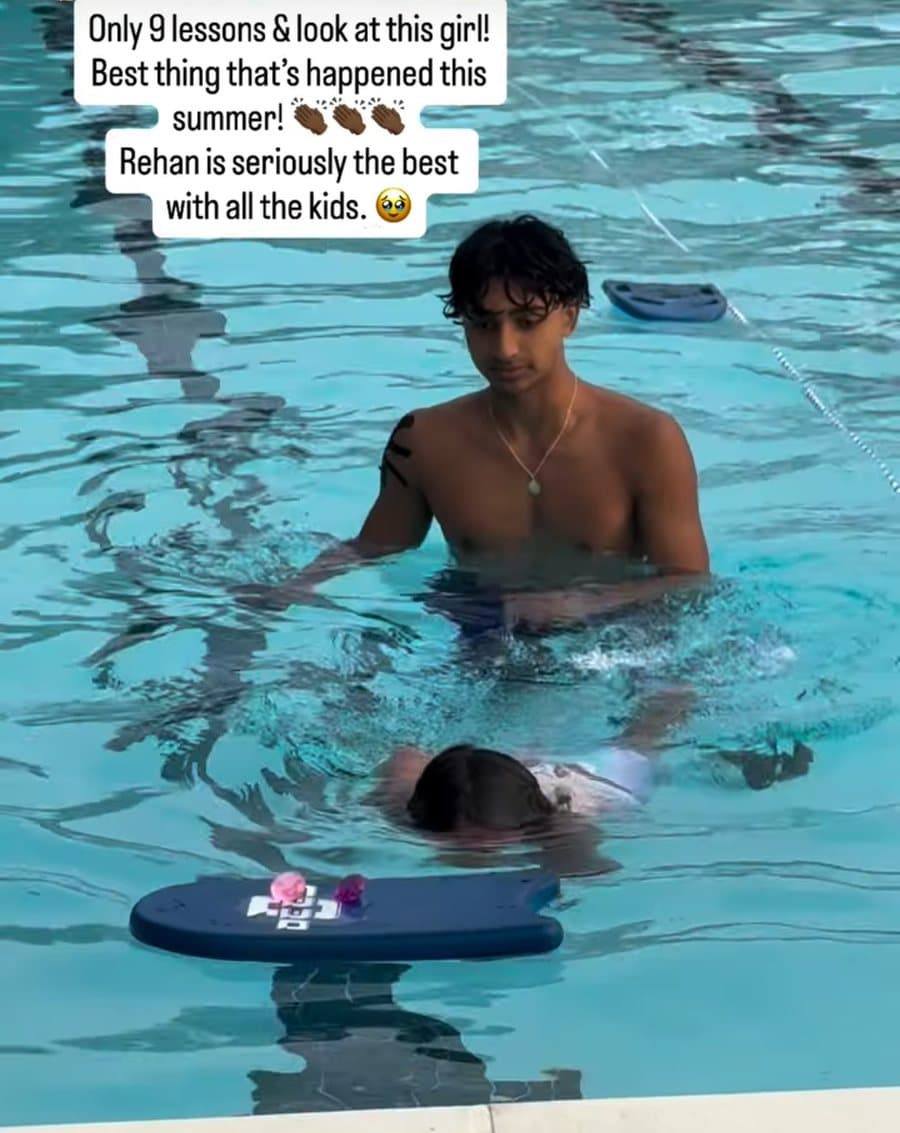
Some do it in fewer. A parent whose daughter took lessons with Rehan Ahmad in Dubai wrote after nine lessons that the change was the best thing that had happened that summer. Others take longer, and that is equally normal.
Decide what learning to swim actually means to you
The question has no answer until the goal is defined, because three very different goals get called learning to swim.
The first is water safety and self-rescue: being able to get back to the wall, hold on, turn around, float on the back and call for help. This comes first and it comes fastest. It is also the goal that matters most, and the World Health Organization specifically recommends teaching basic swimming, water safety and safe rescue skills as a drowning-prevention measure.
The second is independent swimming: crossing a pool unaided with a recognisable stroke, treading water, and getting in and out without help. This is what most parents mean and it takes the longest block.
The third is stroke competence: clean freestyle with rotary breathing, backstroke, breaststroke, and eventually butterfly, turns and starts. That is ongoing work rather than a finish line, and competitive swimmers never really stop doing it.
- Water safety and self-rescue: the first goal, reached soonest
- Independent swimming: the usual definition, needs a full block
- Stroke technique and endurance: ongoing, no end point
What usually happens in the first block of lessons
The first lesson is an assessment as much as a lesson. Rehan finds out what the swimmer can already do, how they react to the water, and what they are afraid of, then builds the plan from there.
Early lessons deal with comfort, breath control and body position: blowing bubbles, putting the face in, floating on the front and back. These look unimpressive from the poolside and they are the foundation everything else sits on.
The middle of a block is where movement appears. Kicking with a board, gliding off the wall, arms added to the kick, and the first unaided metres. This is usually the point where a parent watching says the change became visible.
The end of a block is about independence and repetition: swimming without the coach within arm's reach, getting in and out unaided, and doing it again until it is reliable rather than lucky.
Children: what to expect
Young children learn in uneven steps rather than a straight line. Three lessons of apparently nothing can be followed by one where everything arrives at once, and that pattern is normal enough that it is worth warning parents about in advance.
A confident four to six-year-old who is already happy in water often reaches independent swimming inside a single eight-lesson pack. A nervous child of the same age may spend the first pack purely on confidence and start swimming during the second, which is not a failure and not wasted money.
Children who swim recreationally between lessons progress noticeably faster. Fifteen minutes of unstructured play in the pool on a Friday does more than most parents expect.
Adults: what to expect
Adults usually need fewer lessons than they fear, and the reason they think otherwise is that they are measuring the wrong obstacle. Most adult beginners do not have a strength or coordination problem. They have a breathing and relaxation problem, and once that is solved the rest moves quickly.
A typical adult beginner spends the first two or three lessons on breath control, floating and trusting that the water holds them up. From there, freestyle with the face in the water tends to come together over the following handful of sessions.
Adults also have one clear advantage over children: they can be told why a movement works and act on it immediately. The trade-off is that they often carry a specific bad memory of water, which takes patience rather than technique to undo.
Why weekly consistency beats intensive blocks
One lesson a week, sustained, produces better results than five lessons crammed into a single week and then nothing for three months. Swimming is a motor skill, and motor skills consolidate in the gaps between practice sessions rather than during them.
Long gaps are the real enemy. A swimmer returning after six weeks off has usually lost confidence rather than technique, and the first part of the next lesson goes on rebuilding it. Two or three of those gaps in a year can double the number of lessons needed overall.
Twice a week suits swimmers with a deadline, such as a school swimming requirement or a holiday, and it does compress the timeline. Below once a fortnight, progress becomes hard to sustain for beginners.
This is the practical reason packs exist. An eight-lesson pack at AED 125 per lesson is not just cheaper than eight singles at AED 200; it is a commitment to a continuous block, which is what actually makes the lessons work.
What slows progress down
A few things reliably add lessons to the total, and most of them are fixable.
- Long gaps between lessons, which cost confidence rather than skill
- Water that is too cold, which cuts an effective hour down to twenty minutes
- Arm bands and floats used outside lessons, which teach a vertical body position that then has to be untaught
- A swimmer who is tired, hungry or has just eaten a full meal
- Pressure from the poolside, which turns a nervous child more nervous
How a block of lessons is structured
Rehan Ahmad plans a block rather than a series of one-off hours. The first lesson sets the swimmer's level, every lesson after it builds on that plan, and the plan is adjusted as the swimmer changes.
The eight-lesson pack includes video progress reports, so a parent can see the difference between lesson one and lesson eight rather than relying on memory. The four-lesson pack includes weekly progress tracking, and both packs include text and call support between lessons.
The free 30-minute intro call is where a realistic number gets discussed. Rehan asks who is swimming, what they can already do and what the goal is, and gives an honest estimate rather than a promise. You can also reach him on WhatsApp on +971 50 248 4481.