The honest version: it depends on the swimmer
There is no single answer, and anyone who offers one has something to sell. Group lessons and private lessons solve different problems, and the right choice depends on the swimmer's confidence, their starting level and what the family is actually trying to achieve.
The useful question is not which format is better in general. It is which one gets this particular swimmer to their goal in the fewest lessons.
Whichever format a family chooses, the underlying purpose is the same. The World Health Organization includes teaching basic swimming and water-safety skills among its recommended drowning-prevention measures, and research reported by the NICHD associated formal swimming lessons with an 88 per cent reduction in drowning risk in children aged one to four.
What group lessons are genuinely good at
Group lessons have real advantages, and it is worth saying so plainly rather than pretending otherwise.
- Children often try harder when other children are trying alongside them
- Squad and club training is inherently a group activity, and there is no private substitute for racing a peer
- The headline price per session is lower
- A fixed weekly class creates a routine a family is less likely to skip
- Sociable children enjoy them, and enjoyment is a large part of whether a child keeps swimming at all
Where group lessons struggle
The difficulty with group lessons is arithmetic. A one-hour class with six swimmers and one coach gives each swimmer roughly ten minutes of individual attention, and a good deal of the rest of the hour is spent waiting at the wall.
The pace is also set by the group rather than by the swimmer. A child who is ahead gets held back, and a child who is behind quietly stays behind, because there is not enough coach attention available to catch them up.
That matters most for the two things beginners need most: correcting a specific fault before it sets into a habit, and being watched closely at the exact moment they are frightened.
What a private lesson buys you
A private lesson is an hour in which nothing is shared. Every correction is for that swimmer, every repetition is watched, and the plan changes in real time based on what happened on the previous attempt.
It also means the lesson can go wherever the swimmer needs it to go. A session that was meant to be about freestyle can become forty minutes of back floating if that is what is genuinely holding the swimmer up, without derailing anybody else's lesson.
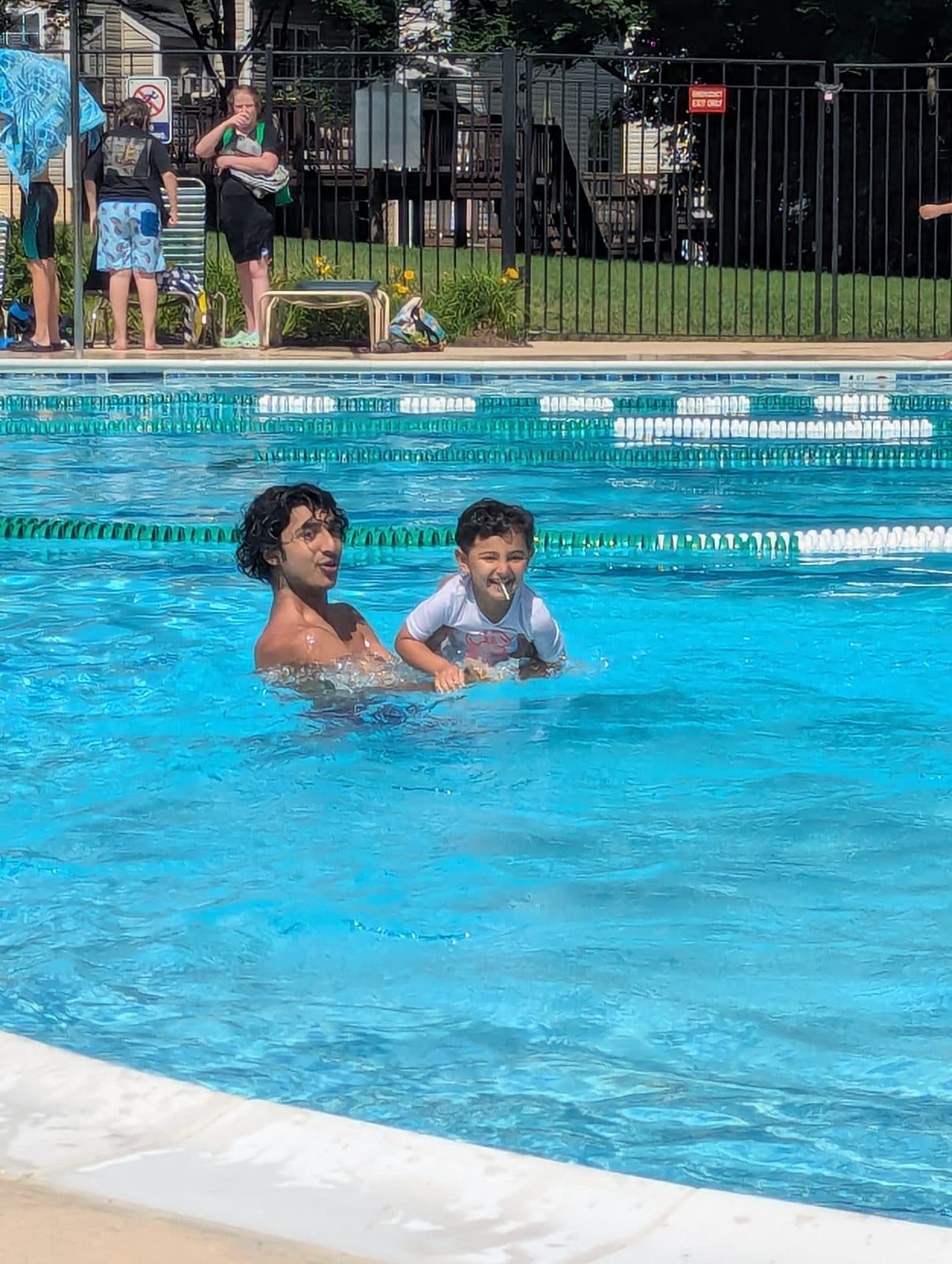
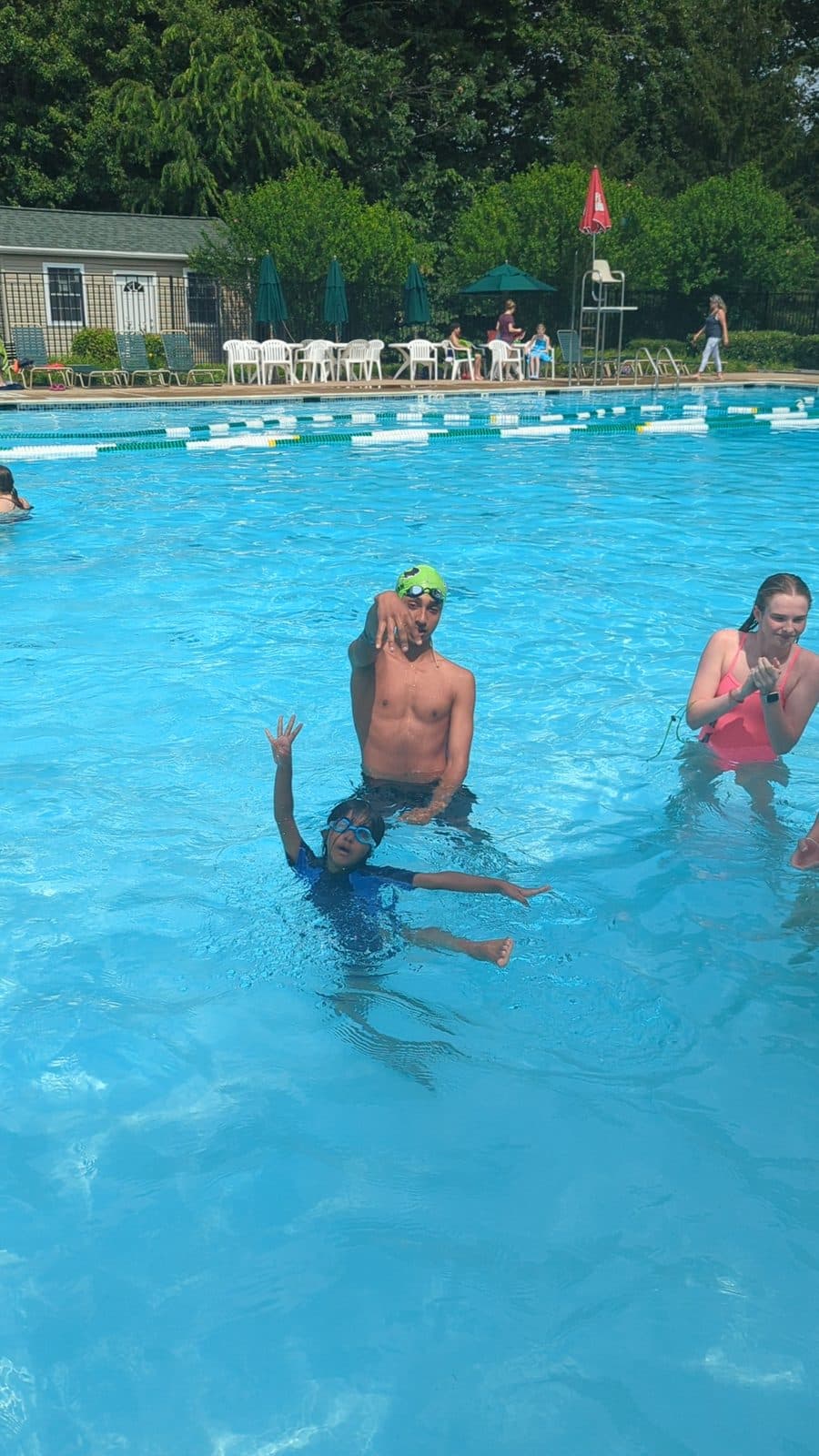
Rehan Ahmad teaches every lesson one-to-one for a full sixty minutes, at the swimmer's own villa, building, community or club pool anywhere in Dubai.
The comparison that matters is coaching minutes, not headline price
Comparing a group class and a private lesson on headline price alone is misleading, because the two are not the same quantity of coaching.
Take a hypothetical six-swimmer group class priced at AED 80 an hour. The individual attention inside it is roughly ten minutes, which works out at something like AED 480 for an hour of actual attention. A private lesson at AED 200 for a full hour is sixty minutes of attention, and AED 125 an hour inside an eight-lesson pack.
That calculation is deliberately crude and the real numbers vary by provider and class size. The point is only that a group class is cheaper per session and usually more expensive per minute of coaching, and a family choosing on price should at least know which of the two they are optimising for.
It also explains why private lessons often take fewer weeks. Fewer lessons at a higher price per lesson can be the cheaper route to the same result.
Nervous children usually do better one-to-one
For a child who is frightened of water, a group class is usually the harder route. The child has an audience, a queue, and a coach whose attention is divided at precisely the moment the child needs it undivided.
Nervous children also develop avoidance strategies in groups: hanging on the wall, going last every time, needing the toilet at the same point in every lesson. Those are difficult to spot and harder to address when the coach is managing five other swimmers.
One-to-one, the pace can drop to whatever the child can genuinely handle. A first lesson that spends the full hour blowing bubbles in the shallow end is a good lesson if the child comes back willingly the following week.
Adult beginners almost always do better one-to-one
Adult beginners are the clearest case for private lessons, and the reason is social as much as technical. Very few adults want to learn a basic childhood skill in front of a class of strangers.
There is a practical reason too. Adult beginners nearly always have one specific blocker, most often the breathing or the fear of not being able to touch the bottom, and an hour of undivided attention resolves it far faster than a rotation in a group ever will.
A private lesson at the adult's own building pool removes the audience entirely. For many adults who have put off learning for years, that is the single thing that finally makes them start.
Siblings, small groups, and how to decide
There is a middle option. Lessons with Rehan Ahmad are private by default, but sibling and small-group lessons can be arranged on request, which suits families who want two children taught together and are comfortable with the attention being split between them.
As a rough guide: choose a group class for a confident, sociable child who is already swimming and enjoys the routine. Choose private lessons for a beginner, a nervous swimmer, an adult, a late starter, or anyone with a specific fault to fix.
Many families use both in sequence, taking private lessons to get a child to a competent standard and then a club or class to keep them there. If you are not sure which applies, the free thirty-minute intro call is the place to work it out.